Calvary Cemetery, Queens NY – July 3, 2022
I’m not sure what these “Cemetery Visit” posts are for/will be about, but I have to start writing in some way—so here it goes. They will most likely contain a random assortment of sights seen during my visit as I rarely go with any particular goal in mind. It’s a safe bet that there will be mention and depiction of burial markers, though respect for the deceased and their attendant communities is first and foremost. I’ve got many thoughts on this, and even more resources which have helped shape my thoughts. At the time of writing this post, I am still working on the resource list, but it will be up soon. I intend to make dedicated posts about my research, but I hope my views become apparent through my writing as well. This is not to say that my views are indisputable, unchangeable, or evenly fully formed; I hope to be challenged, transformed, and solidified as I continue to learn and immerse myself in the worlds of burial grounds and archives.
I decided to visit Calvary Cemetery on July 3rd because my Graduate Student Poster submission deadline for the Society of American Archivists’ 2022 Conference was coming up. My poster proposal on “Cemeteries as Community Archives: Unconventional Records, Ethics of Care, and Equitable Access” had been accepted and the virtual poster was due July 5th—I was looking for some last minute inspiration. (My physical poster is not due until the conference and will feature the same information in a slightly different format; a post for that is sure to come). I chose Calvary because it is the closer of the two cemeteries near my apartment; a trip to Mt. Zion Cemetery is soon warranted. For this trip, I returned to the “Old Calvary” section of the cemetery (it offers the most shade for hot summer days). The trustees have expanded the footprint of the cemetery several times since its establishment in 1847, sandwiching preexisting roads which are now major bridges and highways. For a more detailed history of Calvary (and excellent investigations into many of New York City’s historic, erased, or unrecognized cemeteries), please read Mary French’s blog, “New York City Cemetery Project.”

Entering through the main gate and traveling down the center road, it is hard to miss this massive burial marker. Each time I see it, I am reminded of the concept of people’s names occasionally matching their professions (having looked it up, ‘aptronym’ is the word for coincidental matches and ‘nominative determinism’ is the theory of names and their influence). In this case ‘Skelly’ referring to the bearer’s present disposition within the cemetery.
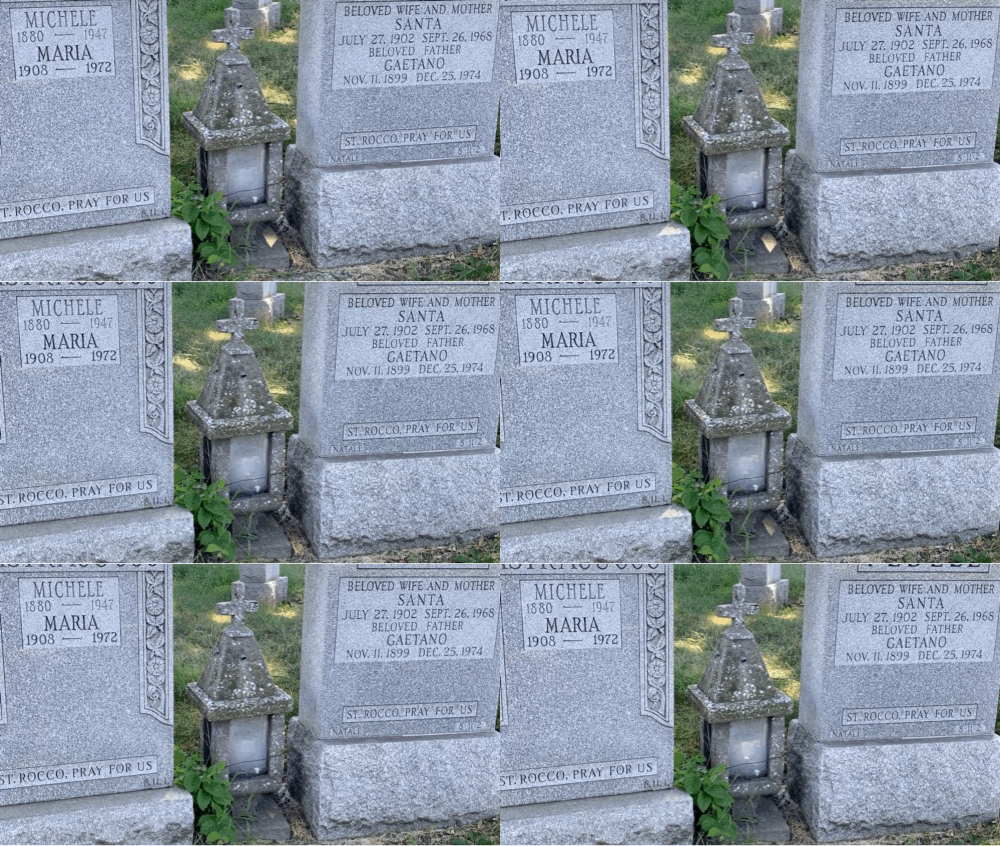
This stone lantern caught my eye as its candle appeared to be lit though I had not seen anyone else in this section of the cemetery. In actuality, the tree shading the burials was being blown by the wind causing the sunlight to dance through the leaves and reflect off the lantern’s glass windows. A neat effect that reminded me of the fireflies which have begun to make their seasonal appearance, my favorite feature of summertime. Allison C. Meier, a renowned cemetery and death author in NYC, has written a lovely piece on fireflies (in cemeteries) for the website NYC Microseasons.
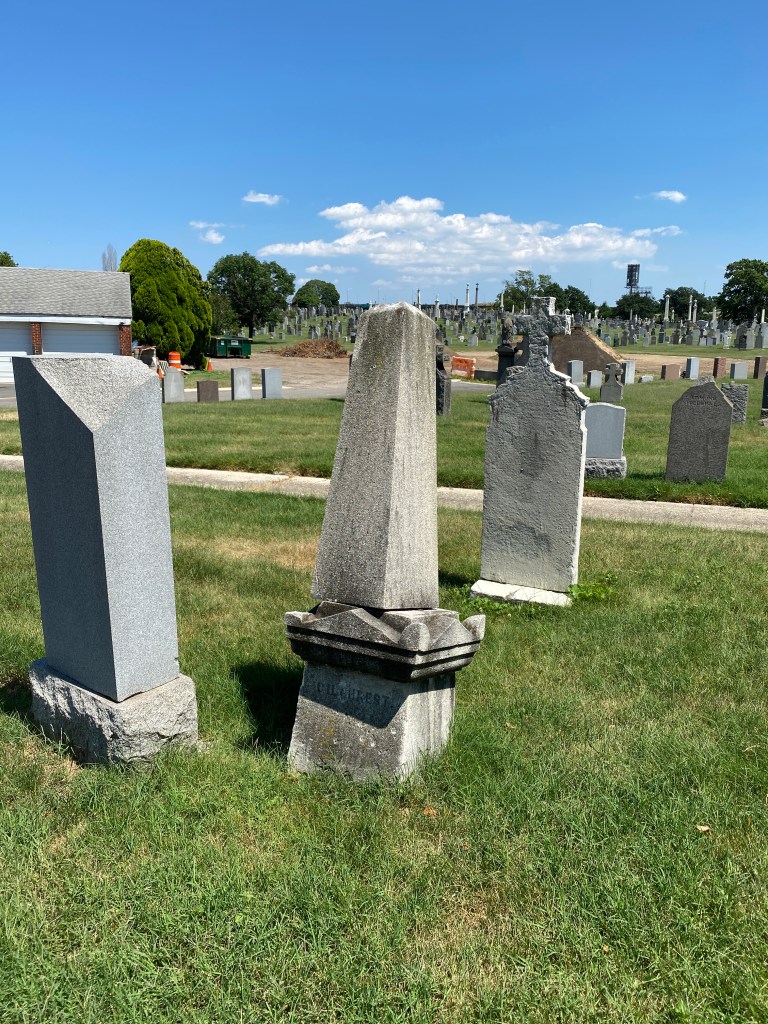

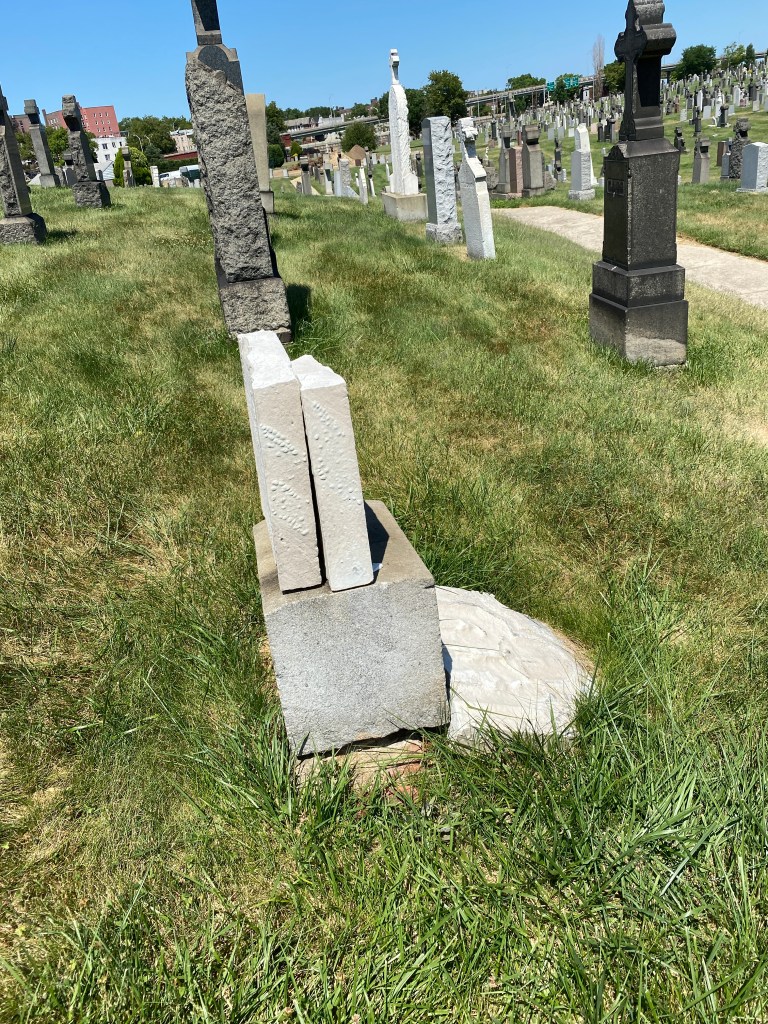
As in many cemeteries, so in Calvary, one can expect to find several leaning, sunken, or damaged burial markers. They are an unfortunate consequences of time, neglect, and abuse; graves settle, lawn mowers bump, and nature or vandals maltreat these records of the dead. It is hopeful that an institution as large as Calvary will be able to afford to care for their damaged markers but it often involves a complex equation of perpetual care funds, time, resources, skilled labor, and advocacy. Please never attempt to repair, straighten, or unearth a marker by yourself, and especially if you do not have professional training in the practice or permission from the cemetery/descendants of the deceased. Not only is it disrespectful (regardless of intentions), it is very likely illegal. Gravestone cleaning has seen a recent resurgence in popularity, but proper procedures should still be followed. Robyn Lacy and Ian Petty operate Black Cat Cemetery Preservation in St. John’s, Newfoundland and Labrador and offer more information on this subject on Robyn’s personal site (Spade & the Grave) and their company’s site (Black Cat Cemetery Preservation).
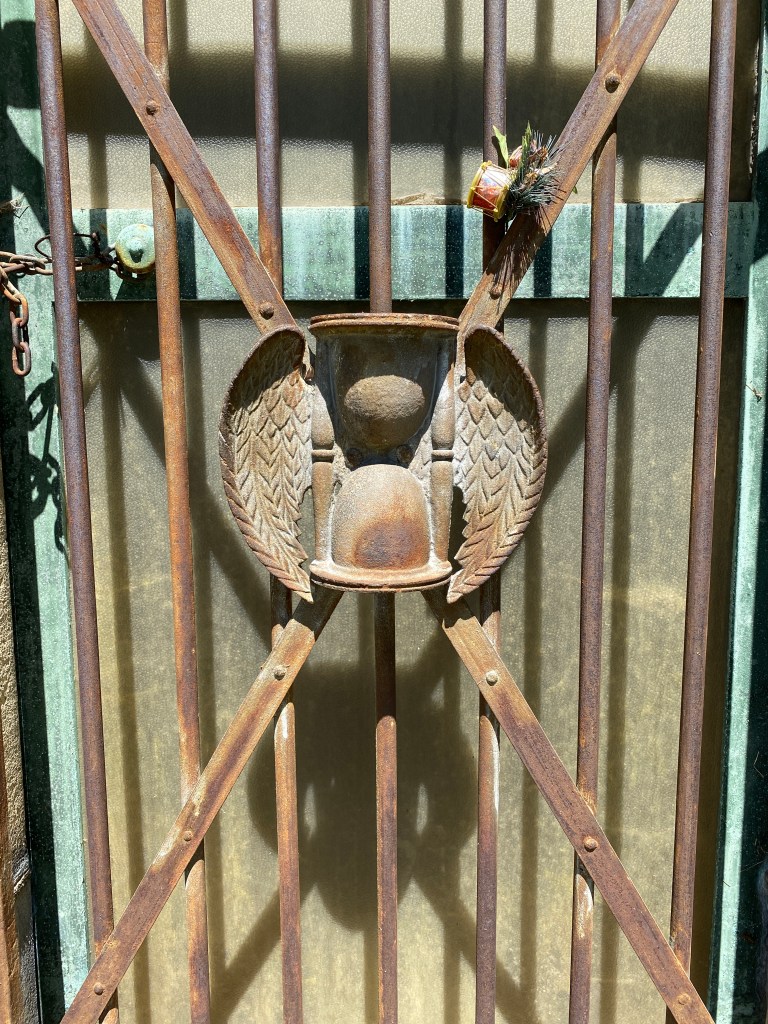
It wouldn’t be a first post if I did not feature a piece of memento mori. I’ve seen winged hourglasses (even bat-winged ones) and death heads on stone burial markers, but this is my first metal winged hourglass. The gate on which this memento resides guards the entrance to a hillside mausoleum—of the family Gauton. The Gauton mausoleum sits at the base of the Johnston Mausoleum, Calvary’s largest monument (see, again, Mary French’s post on Calvary). While the size of the monument may have been the most important feature to the interred, the inscriptions, engravings, and adornments can provide us with much more information about their beliefs regarding this world and the next.
This was a great trip to a familiar cemetery. I see something new every time I visit. Thanks for reading my first post; there will be much more to come. More than just cemetery visits, I am planning writings on cemeteries as community archives, unique forms of information burial markers can offer, the regional histories of cemeteries, and who knows what else!
Semper disce (always learn)
-Chris
*All links captured by the Internet Archive


One response to “Cemetery Visit”
[…] mentioned in my first post (Cemetery Visit) that I was finalizing my physical poster for the conference, having just submitted my digital […]
LikeLike